
RAG for Technical Documentation: How AI Uses Your Manuals and Service Records
How to make AI answer from your own documentation (manuals, technical sheets, service records) instead of from memory. What RAG is, why it fits technical documentation, and where its limits are.
In this note

RAG for Technical Documentation: How AI Uses Your Manuals and Service Records
Reading time: approx. 7 minutes
Short answer: RAG (retrieval-augmented generation) is an approach where AI answers based on your documents rather than from the model's memory. When a question comes in, the system first searches your technical documentation (manuals, technical sheets, service records) for matching fragments, and only then assembles an answer grounded in those fragments, with the option to point to the source. This lets you use company knowledge without training your own model and with far less risk of made-up answers. It is the shortest path from "we have tons of documentation nobody reads" to "a technician asks and gets a relevant answer with a citation".
RAG is search, not teaching the model
The most common misconception goes like this: "we need to teach the AI about our machines". In practice, sensible deployments do not train the model on your data. The model stays as it is, and your documentation goes into a separate base that the system searches. The order is always the same: question, search for matching fragments, answer grounded in those fragments.
This has two practical consequences. First, adding new knowledge is cheap: a new manual or a new batch of tickets simply means dropping a document into the base, not retraining the model from scratch. Second, answer quality depends not on the model's intelligence but on whether the right fragment can be found at all. That shifts the center of gravity from technology to the quality and preparation of your documentation.
Why RAG fits manufacturing well
Technical documentation has a trait that makes it ideal material for RAG: it is large, scattered and rarely read cover to cover, yet it contains concrete answers to concrete questions. Nobody knows the full technical documentation of thirty machines by heart. But the answer to "what is the tightening torque for this joint" or "how do I reset this alarm" is in there, you just have to find it in the right paragraph of the right document.
RAG does exactly that. Instead of making a technician dig through five hundred pages, it surfaces the right fragment and serves it with a reference to the source. That turns dead documentation into something people actually use.
Four layers of documentation and their difficulty
Not every document is equally easy to use. In practice you usually have four layers:
- Manufacturer documentation (manuals, technical sheets, diagrams). Structured, but often as scanned PDFs, with tables and drawings. It needs solid text extraction (OCR) and splitting into sensible fragments.
- Service ticket history. The most valuable layer, because it captures real failures and real fixes. Usually written in terse, inconsistent shorthand, so harder for search. For a concrete workflow built on exactly this layer, see RAG on service documentation in machine service.
- Internal cards and procedures. Your own standards, often the most up to date, if they are maintained.
- Scattered knowledge (emails, notes, photos). Chaotic, but sometimes the only record of an unusual case.
A deployment starts with an honest inventory of these layers. Skip it and it is easy to build a system that quotes the manufacturer's manual beautifully and knows nothing about the failures of the last five years.
What actually drives quality on technical documents
A few things that make technical documentation harder than plain text:
- Scans and PDFs. Much technical documentation is scanned paper. Without good text extraction (OCR) the system cannot see the content. That is the first real preparation cost.
- Tables and drawings. Technical parameters live in tables, and those fall apart easily under careless processing. Drawings and diagrams need a separate approach or a description.
- Versions and currency. The same machine after an upgrade has a different procedure. Without version tagging, the system will mix old truth with new.
- Splitting into fragments. Fragments that are too large blur relevance, too small lose context. I expand on this in the separate note on chunking and retrieval quality.
Citing the source is not decoration
In technical documentation, a confident but wrong answer is more dangerous than no answer, because a technician might act on it. So two rules are mandatory here:
- Every answer points to a source. Which document and which section it came from. The technician immediately sees whether an answer has real grounding or merely sounds good.
- "I found no basis" is a correct answer. A system that admits it has no basis is safer than one that always stitches something together. A blank field is a signal to fill a documentation gap, not a flaw in the tool.
Maintenance: documentation is alive
RAG is not a one-and-done deployment. Documentation ages, new machines arrive, procedures change. It is worth setting up three things from the start: a process for adding new documents, tagging of outdated content, and a review of the questions the system could not answer. That last one is a ready-made map of gaps in your knowledge.
What this post doesn't cover
I don't get into the technical details of how to split documents and how to measure search relevance, since that is a separate, more technical topic. I also don't settle whether the model should sit on your premises or in the cloud. The focus here was the whole picture: what RAG over technical documentation is, why it fits manufacturing, and what determines whether it works.
Related notes
Related notes
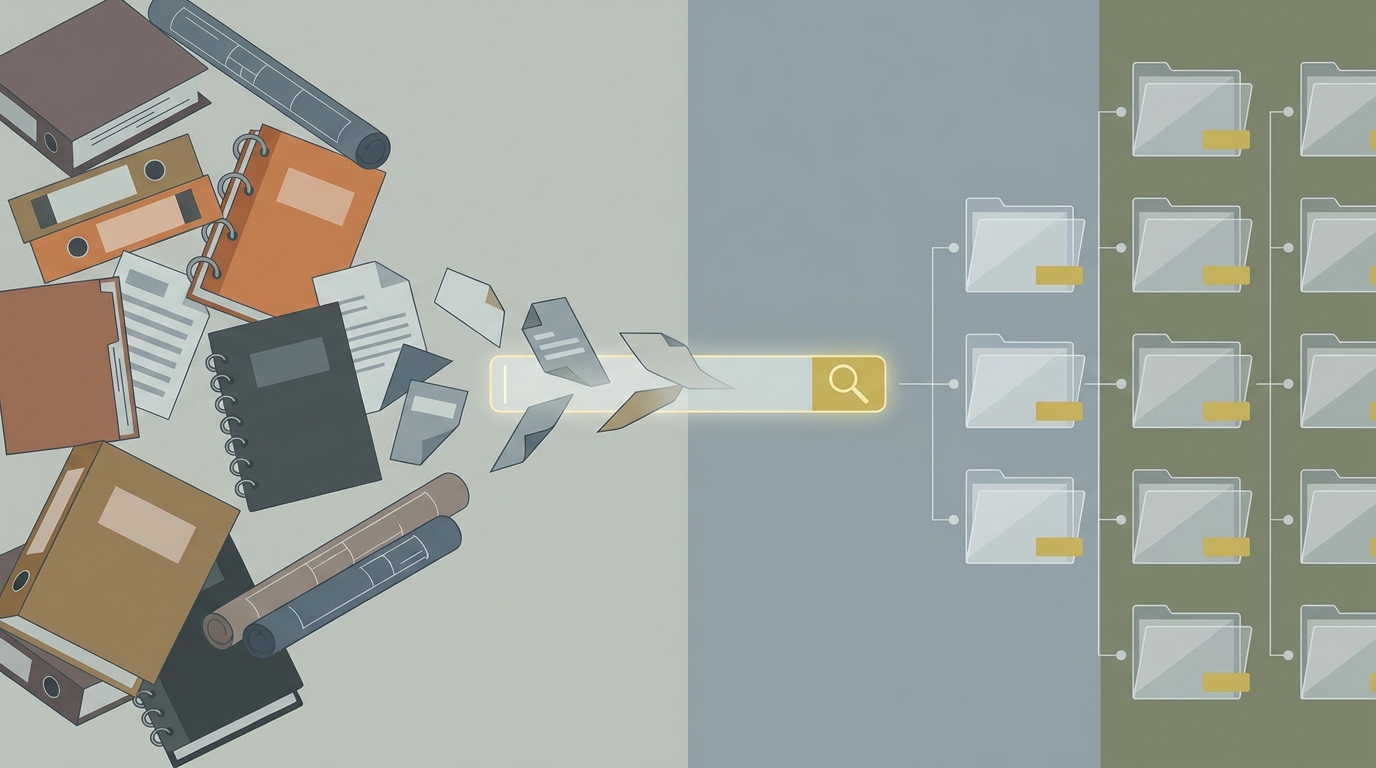
How to prepare technical documentation for AI: DTR, manuals and standards
An AI assistant's answer quality depends more on the state of your documentation than on the model. Six steps that turn DTR, manuals and standards into a base the assistant actually uses.
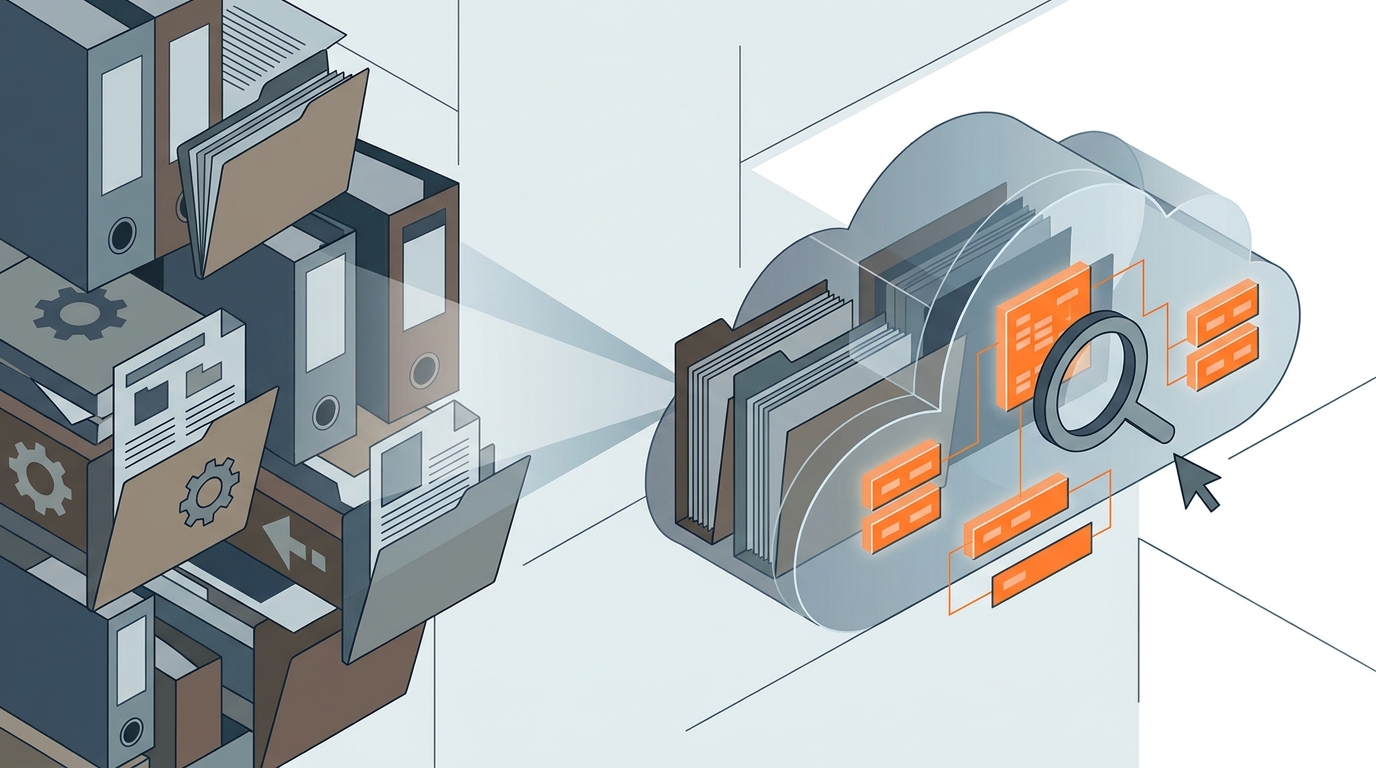
Machine operating and maintenance documentation (DTR): what it contains and where AI helps
A machine's DTR is the full pack: build, operation, maintenance, safety. What it really contains, how to organise it, and where AI genuinely helps, and where it does not.
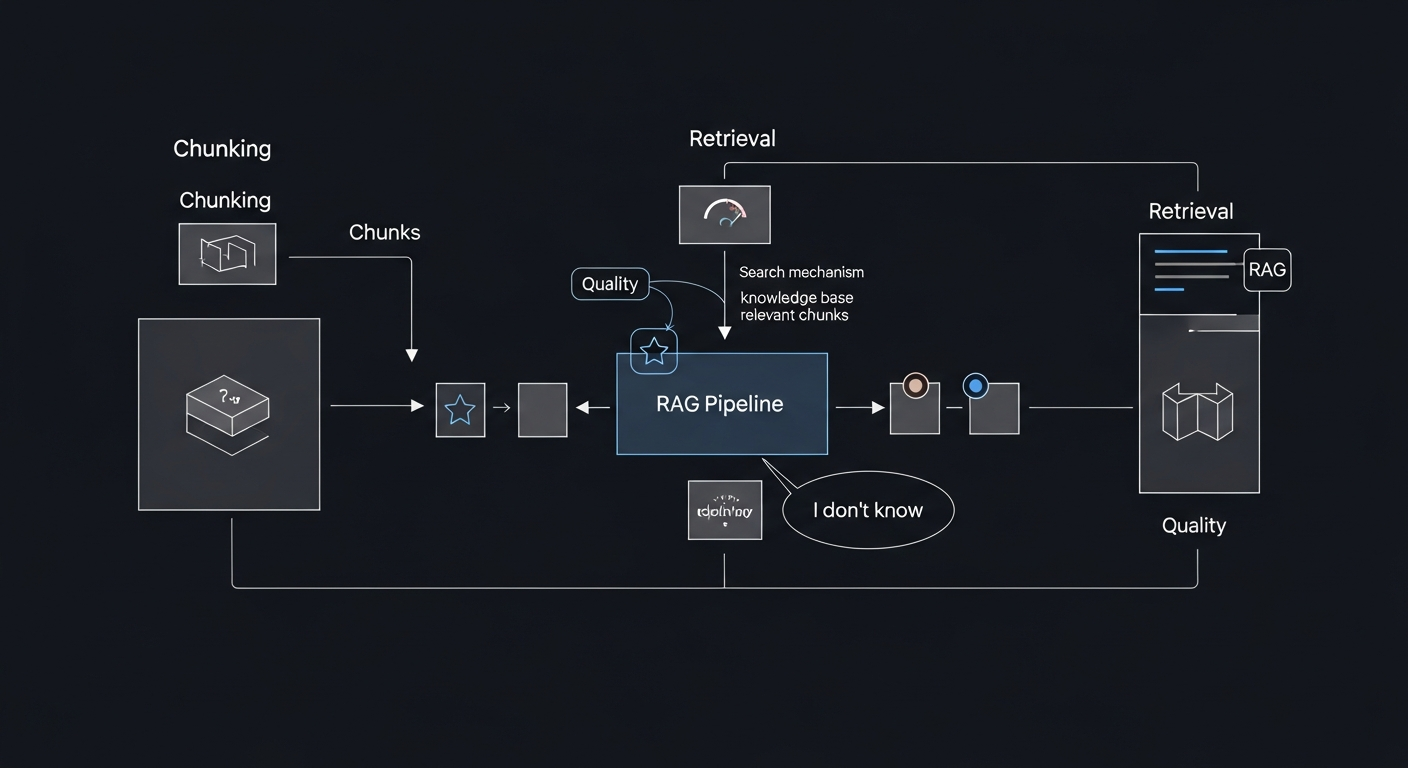
RAG Without Hallucinations: Chunking, Retrieval and What Drives Answer Quality
Why RAG sometimes gets it wrong and how to limit it. Chunking, embeddings, reranking, designing the "I don't know" answer, and how to measure quality before you trust the answers.