
AI in Production Planning: Where It Helps, Where It Fails
AI in production planning: where it genuinely helps and where it only creates an illusion of control. Which scheduling and APS uses hold up, and which are vendor promises.
In this note
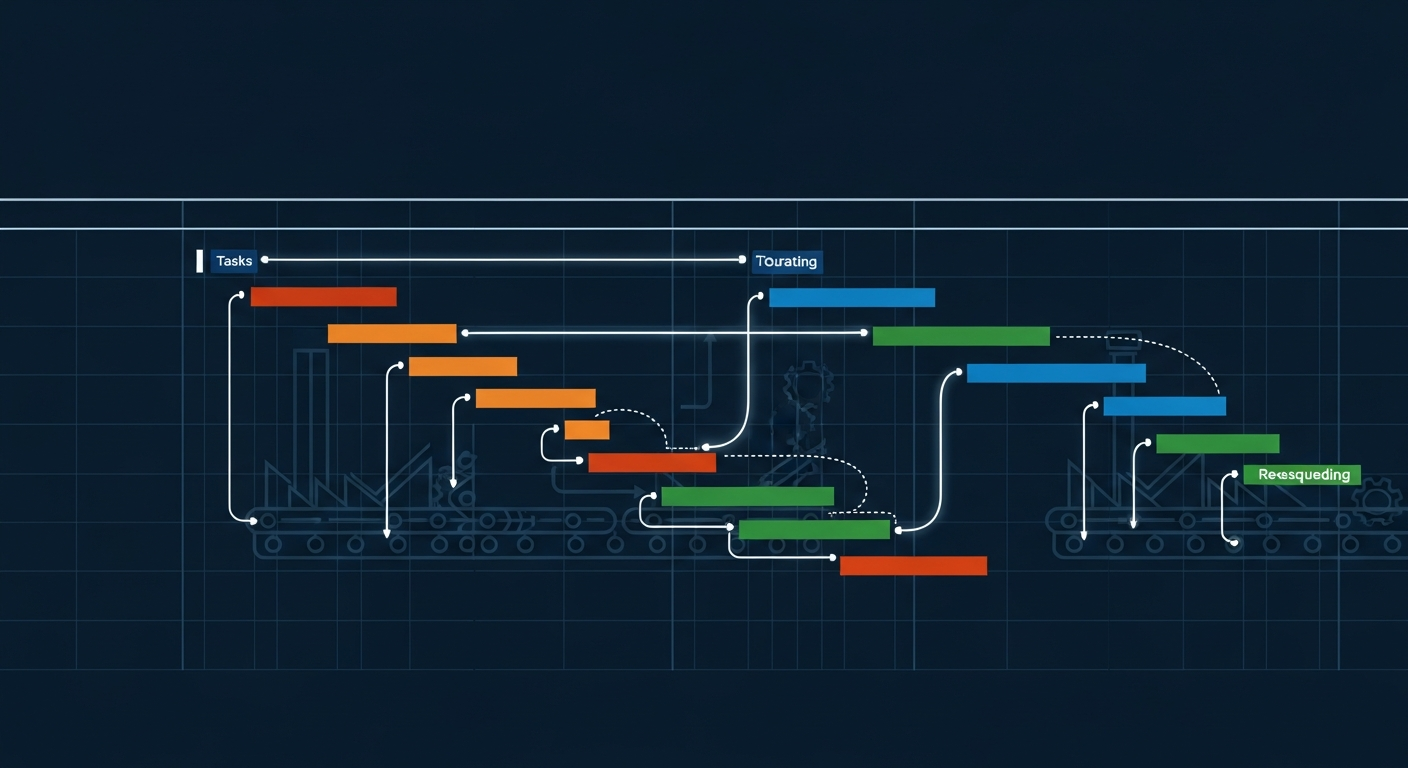
AI in production planning helps where the problem is quickly recalculating many options and catching conflicts in the data, not where the data or the decision itself is missing. It genuinely takes load off a planner in three places: running „what if” scenarios, catching inconsistencies in orders and routings, and suggesting priorities according to rules you already apply. It creates an illusion of control where someone sells a „self-planning factory”: the model only optimises what it has in the data, and in production planning that data tends to be incomplete and late. Below we lay out where AI in scheduling delivers value, where the promises outrun the result, and how to read APS vendor claims so you do not buy a demo instead of a solution.
First, separate the planning levels
„Production planning” is not one task but several layers, and AI behaves differently on each. At the long level, what to make this quarter, forecasts and market data matter, and those are usually not at hand inside the company. At the medium level, the master plan and resource loading, room opens up for rules and recalculation. At the short level, scheduling and APS, the order of jobs on work centres, and in reacting to disruptions, AI has the most to offer, but this is also where the most undeliverable promises are made. Before you assess any tool, settle which level you are talking about, because „AI for planning” means something different on each one.
Where AI genuinely helps
The three uses that hold up in practice share one trait: they speed up work on data you already have, rather than inventing a plan from nothing.
The first is running „what if” scenarios. A machine breakdown, a late delivery, an urgent job jumping the queue: the model recalculates the consequences for the schedule faster than a planner can in a spreadsheet, and shows several options instead of one. A person still makes the call, but now has something to base it on.
The second is catching inconsistencies and conflicts in planning data. An order with no routing, a work centre loaded beyond its availability, a date clash, a missing component for a scheduled operation. This is tedious, error-prone work, and a model is good at spotting patterns of deviation. It detects the problem, it does not solve it.
The third is suggesting priorities and bottlenecks according to rules the planner already knows, but which take time to apply by hand across hundreds of orders. The model adds no new knowledge here, it just applies your logic consistently and fast.
Where AI creates an illusion of control
The most common letdown starts with the promise of a „self-planning factory” in which the system lays out the optimal plan on its own, without the planner. The trouble is that the model optimises only what it sees in the data. If real operation times are rough estimates, machine availability is out of date, and people's skills are recorded nowhere, the „optimal” plan is optimal only on paper and drifts away from the shop floor on the first shift.
The second trap is optimising a metric that is not your real goal. A model can squeeze out maximum machine utilisation while wrecking on-time delivery, if utilisation is the objective it was handed. The tool does exactly what it was asked, including when it was asked for the wrong thing.
The third is the black box. A plan the planner does not understand and cannot defend to a supervisor on the floor will not make it into execution, however measurably better it is. The trust of the planner and the shift lead is a condition, not an add-on, and a tool that does not show „why” will not earn it.
The bottleneck is the data, not the model
Successful and failed planning deployments share the same common denominator: schedule quality equals the quality of the data it was built on. Real operation times instead of decade-old standards, actual machine availability, stock levels that match reality, skills mapped to stations. If that data is out of date or scattered across spreadsheets, no model makes up for it, and a better algorithm only computes a bad plan faster. That is why an honest deployment starts with a question about data, not about the model. We described the same mechanism for other uses in the piece on AI in maintenance, where the line between a real use and a promise runs in the same place.
How to read APS vendor claims
A demo always looks good, because it runs on clean, complete data. Your company is not that, so ask about four things. What data the model runs on and how often it is refreshed, because that, not the algorithm, decides the outcome. Whether the planner can see why the plan looks the way it does, because without that no one will defend it. What the system does under disruption, meaning whether it reschedules in a reasonable time or grinds for hours. And who stays in the decision loop, because „full autonomy” in planning is usually a warning sign, not a feature. If you can, ask for a run on a slice of your own data, with your own gaps, not on the vendor's polished example.
Where to start without rebuilding your whole APS
You do not need to replace the system to test whether AI in planning makes sense for you. Start with one narrow use on data you already keep reasonably in order, for example „what if” scenarios for a single line or a single work centre, with the planner in the decision loop. That one case shows whether the problem sits with the tool or with the data, and how much can actually be offloaded. If you are still weighing whether the company is ready for such a deployment, the list of five questions on AI readiness helps. For a wider picture of uses in manufacturing, we collected them in the review of five AI workflows.
What this post does not cover
We do not assess specific APS systems or vendors by name, because that depends on your environment and dates fast. We do not go into the mathematics of optimisation, meaning solvers, heuristics, and queueing models, because that is a separate, technical topic. We also do not give effect figures, because a shorter cycle or better on-time delivery depend on the starting point and do not carry over between factories.
Related
Related notes
How to measure whether an AI rollout succeeded: a KPI framework
The success of an AI rollout is not one number. A KPI framework on three levels (adoption, process, business), with a baseline before you start and an adjustment criterion. How to measure whether it really worked.
From AI Pilot to Rollout: How to Avoid Pilot Purgatory
Pilot purgatory is an AI pilot that neither wins nor fails, it just lingers in extensions. Why pilots get stuck and how to tell when yours is ready for a go/no-go call.
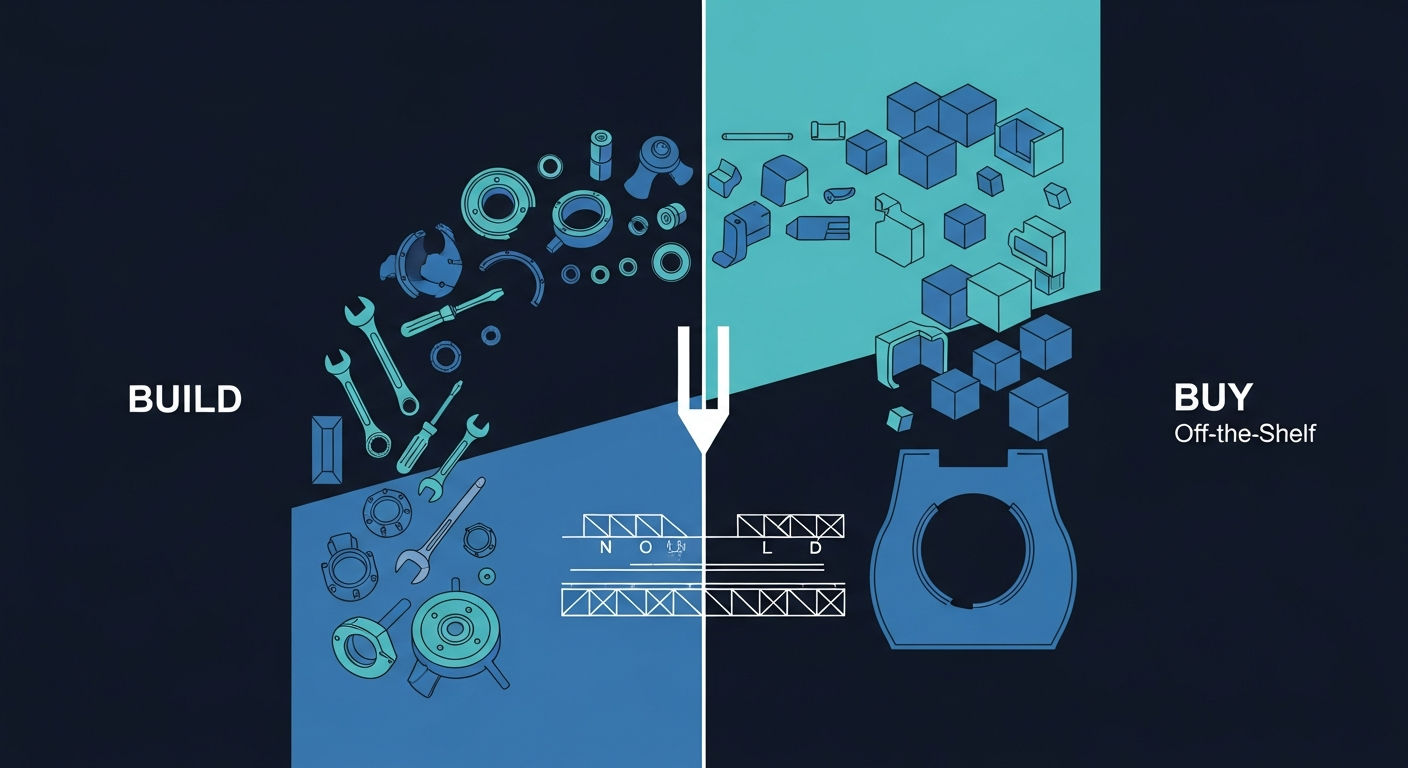
Build vs Buy AI in Manufacturing: Own Model or Off-the-Shelf
Build your own AI model or buy a ready one. An honest decision framework for manufacturers: maintenance cost, people, time to value, and risk. When buying wins, and when building makes sense.