
Machine operating and maintenance documentation (DTR): what it contains and where AI helps
A machine's DTR is the full pack: build, operation, maintenance, safety. What it really contains, how to organise it, and where AI genuinely helps, and where it does not.
In this note
Machine operating and maintenance documentation (DTR): what it contains and where AI helps
Reading time: approx. 7 minutes
Short answer: DTR (the Polish „dokumentacja techniczno-ruchowa") is the full set of documents for a machine or device, describing its build, operation, maintenance and safe working conditions across its whole life cycle. In Polish industrial practice it is usually required and should be available in Polish. The problem for most companies is not that the DTR is missing, but that it is scattered across binders, scans and folders, is sometimes out of date, and is hard to search, so a technician loses time just finding the right page. Below we break down what a DTR actually contains, how to organise it, and where AI genuinely helps, namely fast search and summarising with a cited source, and where it does not yet.
What a DTR is and what it contains
A DTR is not a single manual but a set of documents usually supplied by the machine's manufacturer. A typical DTR holds the technical description and rating data, diagrams (mechanical, electrical, pneumatic or hydraulic), the operating manual, the maintenance and lubrication instructions, the spare-parts list, safe-operation and health-and-safety conditions, and formal documents such as the declaration of conformity or the warranty card. The operating manual is therefore only one element of the DTR, not the whole.
What a DTR is really for
A DTR is not a document for the drawer. It is what lets you operate a machine safely, run maintenance to the manufacturer's recommendations, order the right spare parts, train new operators, and pass audits or inspections. When a machine stops, the first place maintenance should reach for is the DTR. If at that moment the documentation cannot be found quickly or is incomplete, the downtime grows by the time spent searching.
Why a DTR often does not work in practice, even when it exists
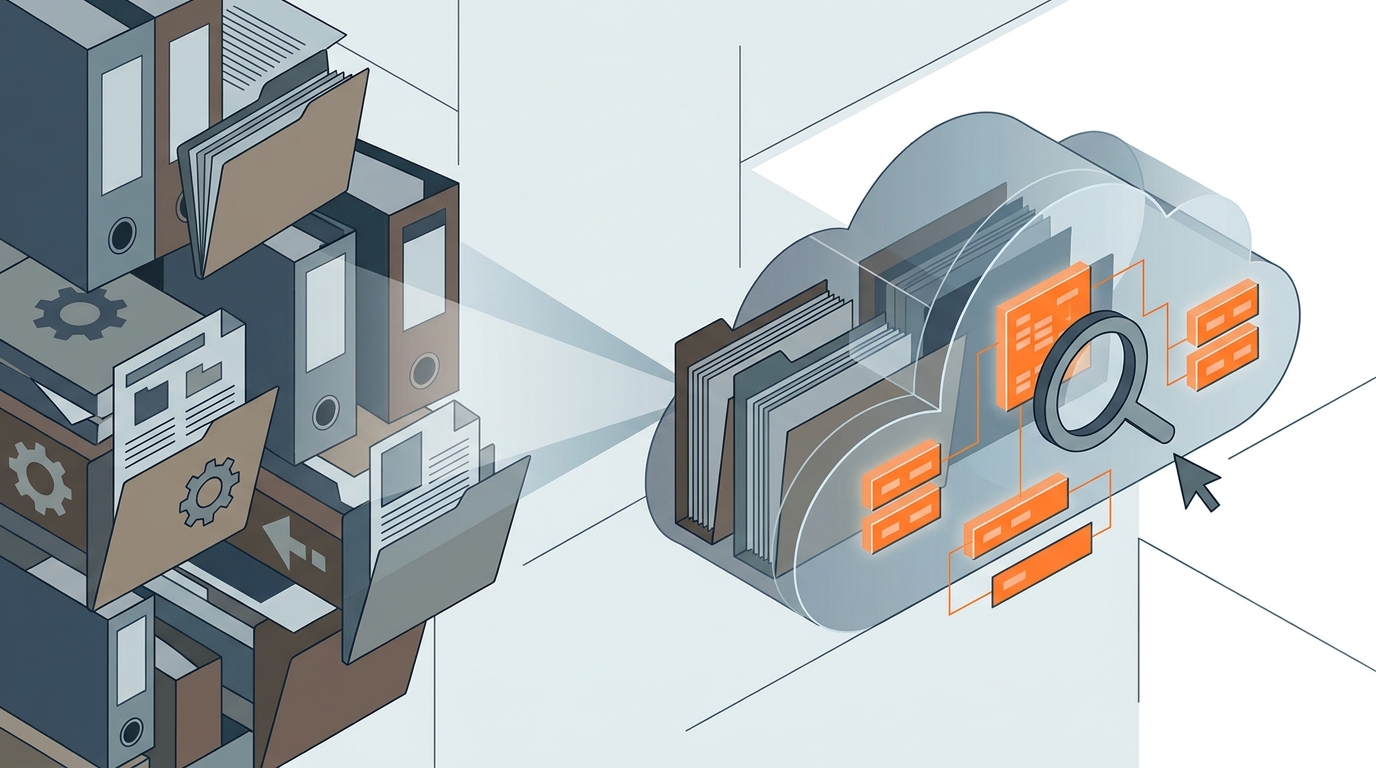
Most companies have a DTR and still do not use it efficiently. The reasons are several and they compound. The documentation is scattered: some on paper, some in PDF scans, some in folders on a drive, and some with specific people. It is sometimes out of date, because after a machine was modernised nobody updated the diagram. It is hard to search, because a scan is an image, not text. And a lot of knowledge about the machine never made it into any document, it sits in the heads of two or three experienced technicians. The result is that the DTR formally exists but works slowly in daily practice.
How to organise a DTR before AI comes in
Before any tool starts using the DTR, it is worth bringing it to a state where it can be used at all. In practice that means a few things: one source instead of many copies, a consistent folder structure per machine, digitising scans so they are searchable text rather than an image, and basic metadata, that is, which machine a file refers to and which version it is. It is dull work, but it is what decides whether anything downstream works. How much of this organised documentation you need for an assistant to have something to draw on we broke down in the realistic sizing of an assistant in a technical office.
Where AI genuinely helps
Once the DTR is organised and searchable, AI does one thing that genuinely shortens the work: it lets you ask in plain language and get an answer with a cited source, instead of leafing through a binder. A technician asks „what is the tightening torque for this joint" or „where is the lubrication diagram", and the system pulls the right fragment from the DTR and points to the document it came from. The mechanism behind this, retrieval-augmented generation over your own documentation, we broke down in RAG for technical documentation, and how to avoid fabrication in RAG without hallucinations. The principle is the same as everywhere: AI narrows and suggests, a person decides.
What AI will not do here
It is worth naming the limits up front. AI will not create a missing DTR out of nothing, if the manufacturer never supplied it or it was lost. It will not replace the duty to update the documentation after a machine is modernised. And it is no more reliable than its source: if the DTR is incomplete or contradictory, a well-built system will flag that, but it will not invent the missing information for you, while a badly built one will fabricate it. So the order is always the same: organised documentation first, the tool second.
What this post does not cover
This is a practical guide to what a DTR is and how to prepare it for work with AI, not legal advice or an interpretation of regulations. The exact requirements for the scope and form of documentation depend on the type of machine and the applicable rules, and are worth confirming at the source. We also do not go into configuring specific tools or the choice of whether to run such a solution on your own site or in the cloud, because that is a separate topic we broke down in the on-prem or cloud comparison.
Related
- RAG for technical documentation: how AI uses the technical manual and machine instructions
- RAG without hallucinations: chunking, retrieval and what decides answer quality
- AI for managing service knowledge: how to feed the system and where the limits are
- RAG on service documentation: faster diagnosis in machine service
- How much data an AI assistant in a technical office needs: realistic sizing
FAQ
How is a DTR different from an operating manual?
The operating manual is one element of the DTR, not the whole. The DTR additionally covers the technical description, diagrams, maintenance instructions, the spare-parts list and formal documents. In short, the operating manual says how to operate the machine, while the DTR describes it completely across its whole life cycle.
Does a DTR have to be in Polish?
In Polish industrial practice the user documentation should be available in Polish, because operators and maintenance use it. The exact scope of this obligation depends on the type of machine and the regulations, so it is worth confirming at the source. This is not legal advice.
Can AI replace a DTR?
No. AI helps you find and understand what is in the DTR faster, but it does not replace the documentation itself. If the DTR is missing or out of date, the tool has nothing to draw on.
Where do you start if the DTR sits in binders?
With digitisation and one source. Scan the documentation so it is searchable text, gather it in one place in a consistent per-machine structure, and mark the versions. Only on that can you sensibly build AI-supported search.
Related notes
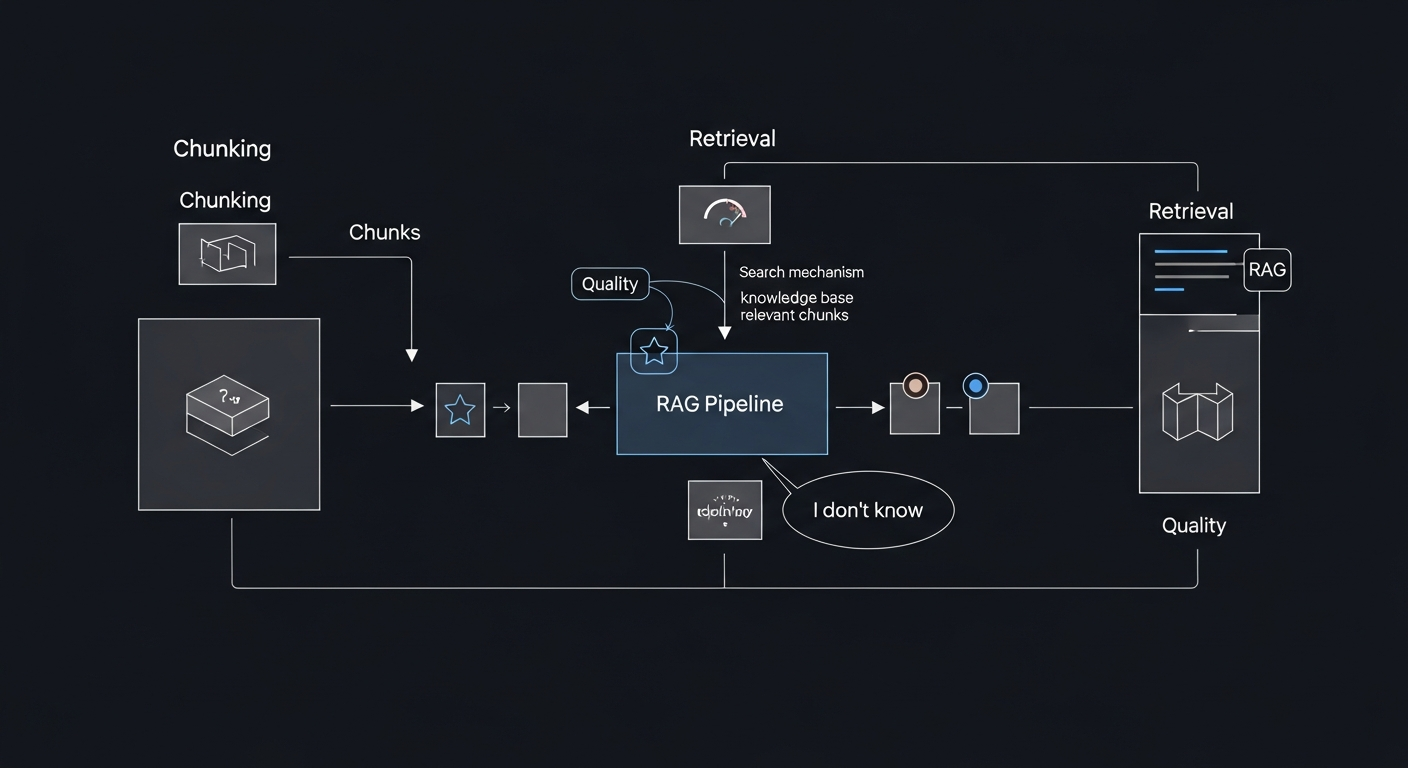
RAG Without Hallucinations: Chunking, Retrieval and What Drives Answer Quality
Why RAG sometimes gets it wrong and how to limit it. Chunking, embeddings, reranking, designing the "I don't know" answer, and how to measure quality before you trust the answers.

RAG for Technical Documentation: How AI Uses Your Manuals and Service Records
How to make AI answer from your own documentation (manuals, technical sheets, service records) instead of from memory. What RAG is, why it fits technical documentation, and where its limits are.