
AI in a mid-sized factory in 2026: what stuck, what fell away
A review of the first half of 2026 in mid-sized manufacturers: which AI use cases made it into daily work, which stayed on the slide deck and what made the difference.
In this note
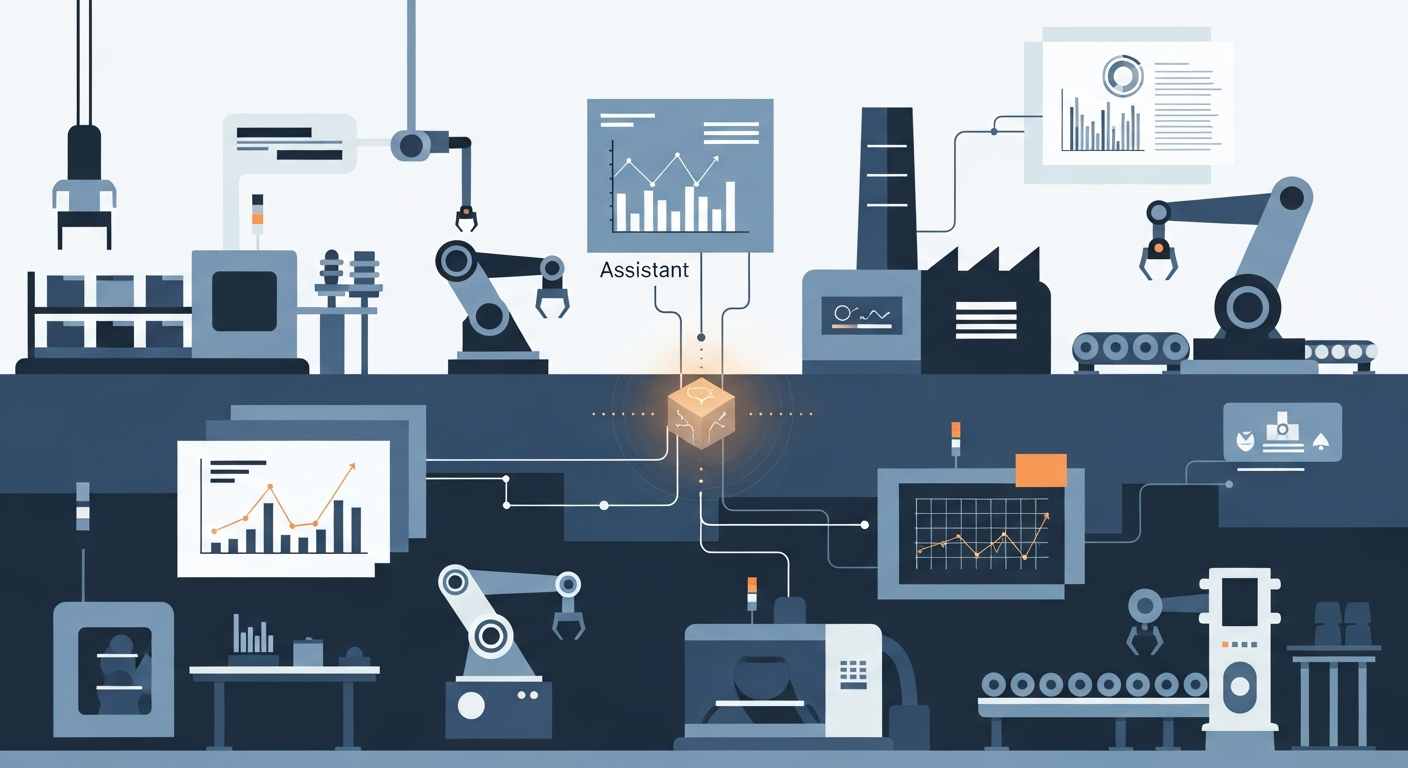
AI in a mid-sized factory in 2026: what stuck, what fell away
Reading time: about 5 minutes
The short answer
After the first half of 2026, the picture in mid-sized manufacturers (50 to 500 people) is fairly clear. What stuck were AI use cases built on documentation that already exists and on repetitive engineering-office work: search across technical docs and machine manuals, service support, checking document completeness, early quoting from a drawing. What fell away, or badly disappointed, were the use cases that assumed clean, tightly integrated machine data in real time: full failure prediction, autonomous end-to-end production planning, „AI that will fix the metrics on its own". The difference between a working and a dead deployment was rarely the model. It came down to three things: the quality of data access, picking one narrow use case to start, and a real project owner inside the company. Below is a review of what actually made it into use and what stayed in the presentation.
What stuck
The common thread among use cases that lasted: they run on data that already exists and is reasonably organised, and a human stays in the decision loop.
Access to technical knowledge held up best. An assistant that answers questions from technical documentation, machine manuals and service history cuts search time and takes load off the most experienced people. It works because documentation is static material and an answer can be grounded in a specific source passage. The same holds for maintenance support: a „where have we seen this before" hint is useful even when it does not replace the technician.
The second proven area is the engineering office and early quoting. Pulling parameters from a technical drawing into a preliminary quote, checking the completeness and consistency of documentation, drafting work instructions for later editing. What they share is that AI prepares a working draft and a human approves it. In that setup a model error is cheap, because it is caught by the person who would have reviewed the document anyway.
The third point is less flashy but important: narrowly scoped pilots delivered a result far more often than broad ones. Companies that picked one process, one department and a clear „works or not" criterion ended up with something they could keep running. That is not a property of the technology, but of how the project is run.
It is worth noting what links these three areas. In each, AI adds to work the company already does, and does it on material it already has. They do not require a new sensor layer, rewiring of systems or a change in how an entire department works. That is why they entered daily use faster than use cases that looked more impressive on a slide.
What fell away or disappointed
The disappointments shared one cause: they assumed data that was better, cleaner and more integrated than what a factory actually has.
Full failure prediction with automated inference turned out to be much harder than the presentations suggested. It needs a long, labelled failure history and stable telemetry, while a mid-sized company usually has fragmentary data spread across several systems with no consistent event description. Without that, the model learns noise. A more modest diagnostic support based on service knowledge worked more often than „prediction" in the strong sense.
Autonomous end-to-end production planning also mostly stayed in the demo phase. Where AI genuinely helped, it did so as support for the planner: it flagged bottlenecks and the effects of changes rather than taking over decisions. A schedule touches too many constraints and exceptions to hand over in full without oversight.
A whole category of promises along the lines of „deploy AI and the metrics will improve" also fell away. Without naming a specific process, an owner and a way to measure it, such projects had no way to prove themselves and quietly faded after the pilot. That is the most common reason an interesting pilot never reached scale.
What made the difference
Across six months the same three factors kept recurring, regardless of industry or the chosen use case.
The first is data access and its condition. If documentation is scattered, inconsistent or locked in formats that cannot be searched, no model will make up for it. Worth checking before choosing a tool, not after.
The second is narrowing the scope at the start. One use case, one department, a clear success criterion. A broad scope sounds more ambitious, but it dilutes accountability and stretches the time to the first visible result.
The third is an owner inside the company. Deployments backed by a specific person with time and a mandate delivered. Those „added to someone's duties" usually did not. The question of data security, and whether the model runs locally or in the cloud, also came up in almost every conversation, especially where documentation covered by company confidentiality was involved.
What this post does not cover
This is a directional review, not a benchmark. We give no hard ROI figures or results from specific companies here, because those depend on the process and the data and do not transfer one to one. We also do not go into the technical details of individual deployments, hardware configuration or vendor comparisons. Those threads are developed in the separate posts under „Related".
Related
- Five AI workflows already paying off in Polish manufacturing
- Service assistant AI: why a mid-sized manufacturer is a good candidate
- AI in production planning: where it helps, where it fails
- From AI pilot to deployment: how not to get stuck in pilot purgatory
- RAG for technical documentation: how AI uses technical docs and machine manuals
- AI on-premise or in the cloud for a factory: what to choose and when
Related notes
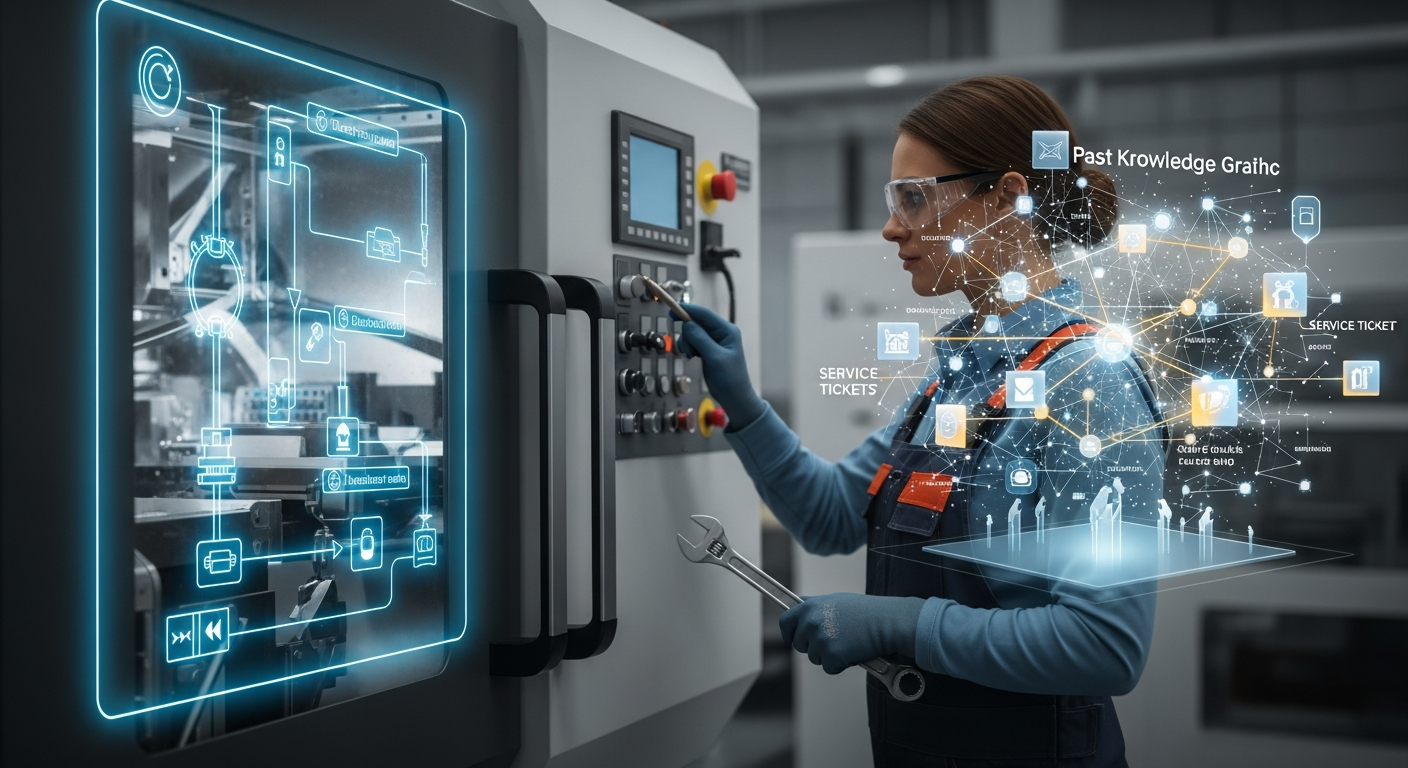
AI service assistant and maintenance: what works, what does not
An AI service assistant is one of the few uses of AI in maintenance that pays off at a mid-sized factory without a three-year wait. Three uses that genuinely work, two that usually disappoint, who it pays off for, and where to start.
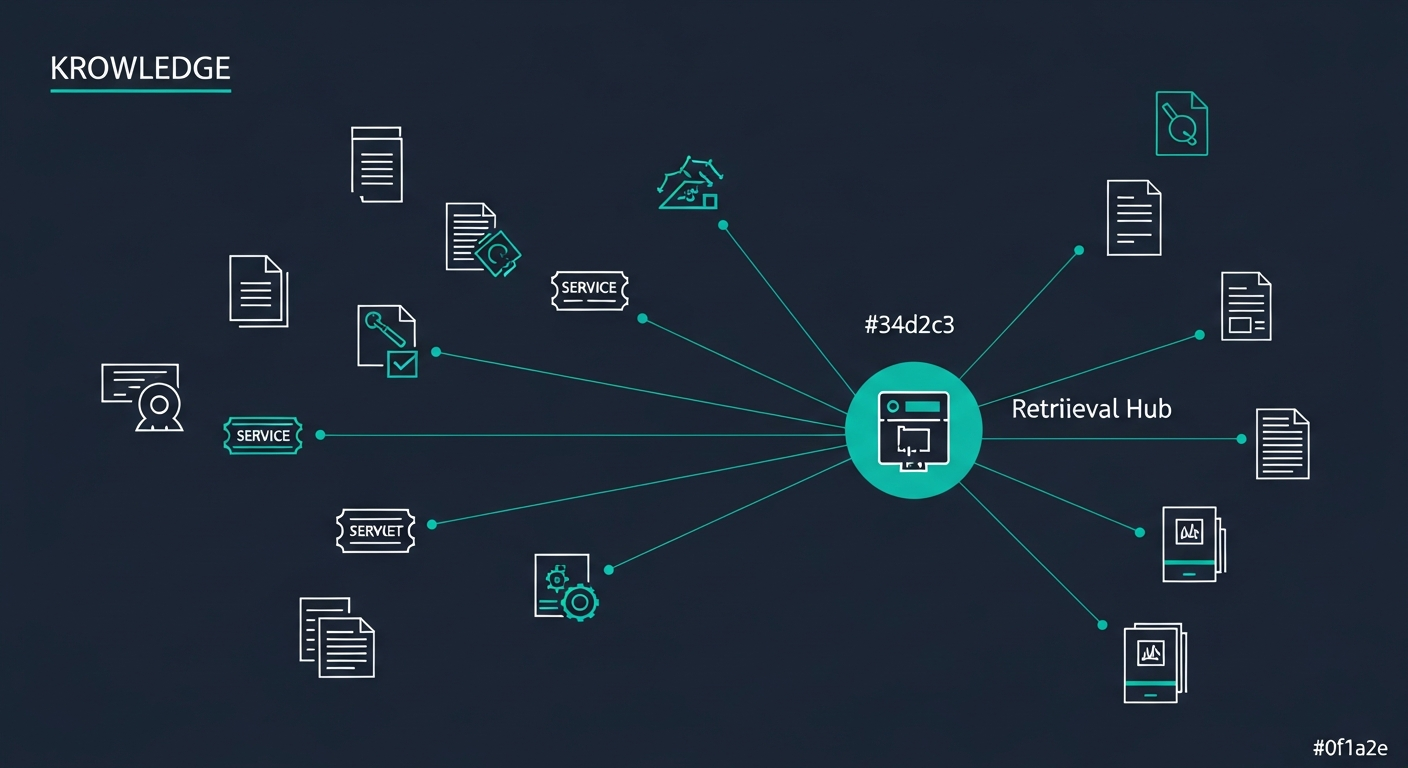
AI for Service Knowledge Management: Feeding the System and Its Limits
A service assistant is only as good as the knowledge you feed it. This post is about that knowledge: where it lives, how it reaches the model, why retrieval sometimes fails, and how to keep quality from rotting as ticket volume grows.
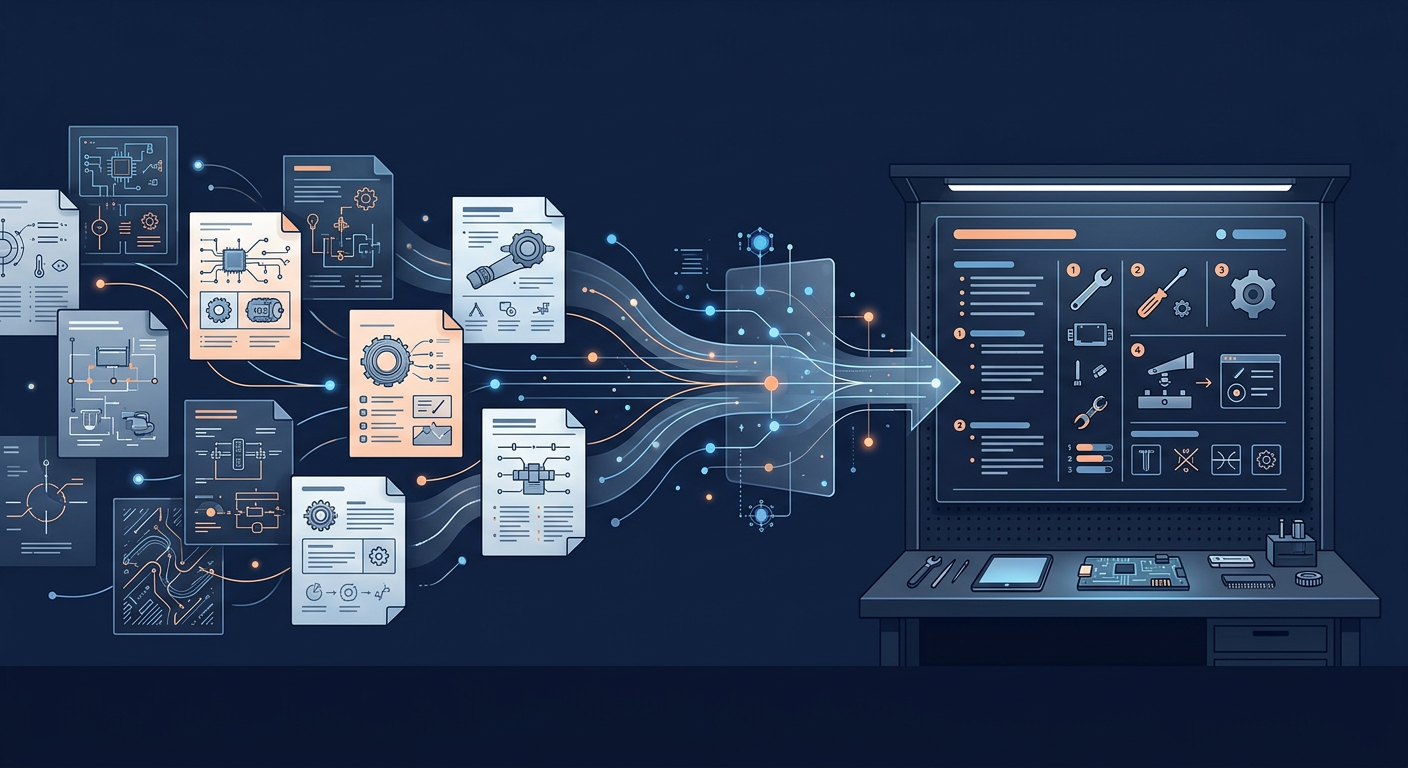
AI for generating work instructions: how it works and what it costs
How AI-driven generation of work instructions actually works in mid-size manufacturing. Pipeline architecture, cost categories (pilot PLN 30 to 70k, full deployment 4 to 6 months), when ROI lands under 18 months, when to skip.